
Introduction
Homemade English muffins are one of those simple breakfast foods that can make an ordinary morning feel a little more special. They have a soft and chewy center, a lightly crisp outside, and a wonderful texture filled with small pockets that are perfect for holding melted butter, jam, cream cheese, or other toppings. They can also be used to make delicious breakfast sandwiches with eggs, cheese, vegetables, or meat.
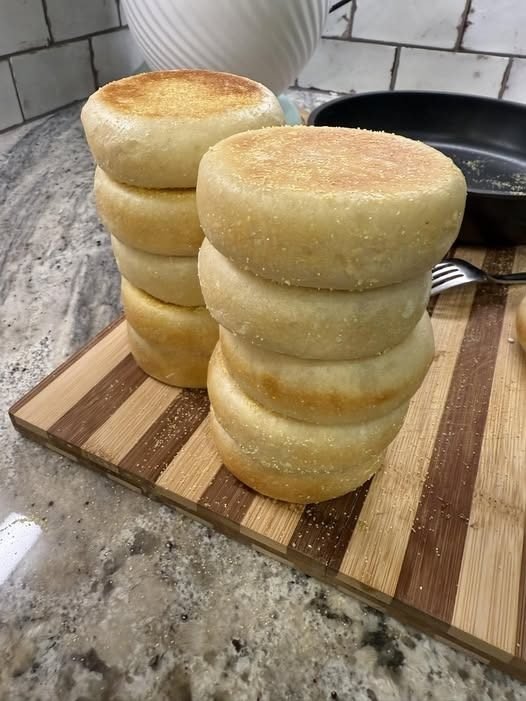
What makes English muffins different from regular bread is the way they are cooked. Instead of going into the oven, the shaped dough is cooked slowly on a skillet or griddle. This gives the outside a beautiful golden-brown color while keeping the inside tender and fluffy.
Making them at home does take some time because the dough needs to rise, but the actual process is quite easy. The ingredients are simple, the steps are straightforward, and the result is well worth the effort. Freshly cooked English muffins have a wonderful flavor and texture that can be hard to find in packaged versions.
Whether you prefer them sweet or savory, these homemade English muffins are a great recipe to keep on hand for breakfast, brunch, or a quick snack.
Why Make English Muffins at Home?
There are several good reasons to make English muffins from scratch.
Freshness: Homemade muffins are made with fresh ingredients and can be enjoyed while they are still warm.
Better Flavor: The dough develops a pleasant flavor as it rises, giving the muffins more depth than many store-bought options.
Classic Texture: Cooking them on a skillet creates lightly browned edges and a soft, chewy center.
Versatile: English muffins can be served with sweet toppings or turned into filling breakfast sandwiches.
Affordable: Basic pantry ingredients can make a large batch, making homemade muffins a budget-friendly option.
Easy to Customize: You can keep them plain or add different toppings and fillings depending on what you enjoy.
Ingredients
This recipe makes approximately 8–10 English muffins.
- 3 ½ cups (420 g) all-purpose flour or bread flour
- 1 ¼ cups (300 ml) warm milk
- 2 tablespoons unsalted butter, melted
- 1 tablespoon sugar
- 2 teaspoons instant yeast or 1 packet active dry yeast
- 1 teaspoon salt
- 1 egg, optional
- Cornmeal, for dusting
Bread flour can give the muffins a slightly chewier texture, while all-purpose flour works very well and is usually easier to find. The egg is optional, but adding it can make the dough a little richer and softer.
Step-by-Step Instructions
1. Prepare the Yeast Mixture
Begin by placing the warm milk in a large mixing bowl. Add the sugar and yeast and stir gently to combine.
If you are using active dry yeast, let the mixture sit for about 5 minutes. It should become slightly foamy, which shows that the yeast is active.
If you are using instant yeast, you do not need to wait for it to foam. You can continue with the recipe right away.
Make sure the milk is warm rather than very hot. Extremely hot liquid can damage the yeast and prevent the dough from rising properly.
2. Make the Dough
Add the melted butter, salt, flour, and optional egg to the milk mixture.
Stir everything together with a wooden spoon or spatula until a rough dough forms. At this stage, the dough may look a little uneven or sticky, which is completely normal.
Transfer the dough to a lightly floured surface and knead for about 8–10 minutes. Work the dough until it becomes smooth, soft, and elastic.
You can also use a stand mixer with a dough hook. Mix and knead until the dough pulls together and becomes smooth.
Avoid adding too much extra flour. A slightly soft dough will help create tender English muffins.
3. Allow the Dough to Rise
Lightly grease a clean bowl and place the kneaded dough inside.
Cover the bowl with a clean kitchen towel, plastic wrap, or a reusable cover. Place it somewhere warm and allow the dough to rise for about 1–2 hours.
The dough should become noticeably larger and approximately double in size.
The rising time can vary depending on the temperature of your kitchen. A warm room will usually help the dough rise faster, while a cooler kitchen may require more time.
4. Roll and Cut the Dough
Once the dough has doubled, gently press it down to release some of the trapped air.
Transfer it to a lightly floured work surface. Roll the dough out to approximately ½–¾ inch thick.
Using a round cookie cutter, biscuit cutter, or drinking glass that is around 3 inches wide, cut the dough into circles.
Place the cut rounds on a baking sheet that has been lightly sprinkled with cornmeal.
Gather the remaining scraps and gently bring them together. Roll them out again and cut more circles. Try not to knead the scraps too much, as overworking the dough can make the finished muffins tougher.
Sprinkle a little more cornmeal over the tops of the muffins.
5. Let the Muffins Rise Again
Cover the shaped muffins with a clean kitchen towel.
Allow them to rest for another 30–45 minutes.
During this second rise, the dough should become slightly puffy and airy. This step is important because it helps produce a lighter texture after cooking.
While the muffins are resting, you can prepare your skillet or griddle.
6. Cook the English Muffins
Place a large nonstick skillet or griddle over medium-low heat.
The pan should be warm enough to brown the muffins slowly without burning them. Avoid using high heat because the outside can become dark before the center has finished cooking.
Place 3–4 muffins into the pan, depending on the size of your skillet. Leave enough space around each one so they can cook evenly.
Cook for approximately 6–7 minutes on the first side.
Carefully flip each muffin and continue cooking for another 6–7 minutes.
Keep an eye on the heat as you cook. If the muffins are browning too quickly, lower the temperature. They need gentle heat so the centers have enough time to cook.
When they are golden brown on both sides and feel firm around the edges, transfer them to a wire rack.
Repeat the process with the remaining dough.
7. Cool and Split
Allow the cooked muffins to cool for several minutes before serving.
For the classic English muffin texture, use a fork to split each muffin rather than slicing it completely through with a knife.
Pulling the muffin apart with a fork helps preserve the uneven crumb and creates those famous little “nooks and crannies.”
Place the split muffins in a toaster or under a broiler until the edges become lightly crisp.
Best Ways to Serve English Muffins
There are countless ways to enjoy homemade English muffins.
For a simple sweet breakfast, spread them with butter and your favorite jam. Honey, peanut butter, cream cheese, or fruit spreads are also delicious.
For a savory option, top them with scrambled or fried eggs and cheese. You can also add cooked bacon, sausage, avocado, tomatoes, or vegetables to create a filling breakfast sandwich.
Toasted English muffins can also be served alongside soups and salads or used as a quick base for mini pizzas.
Helpful Tips
Use warm milk: The milk should be comfortably warm, not hot.
Give the dough enough time: Let the dough rise until it has roughly doubled instead of relying only on the clock.
Don’t use high heat: Low to medium-low heat helps the muffins cook all the way through without burning.
Use cornmeal: It helps prevent sticking and adds a classic texture to the outside.
Don’t overcrowd the pan: Cooking a few muffins at a time allows them to brown evenly.
Split with a fork: This helps maintain the soft, uneven texture inside.
Storage
Once completely cooled, English muffins can be stored in an airtight container or bag at room temperature for a few days.
For longer storage, place them in the refrigerator or freeze them individually. Frozen muffins can be thawed and toasted whenever you need a quick breakfast.
Nutrition Information
Approximate nutrition per muffin when the recipe makes 10 muffins:
- Calories: 180
- Carbohydrates: 33 g
- Protein: 5 g
- Fat: 3 g
- Fiber: 1 g
Nutrition values are estimates and may change depending on the type of flour, milk, butter, egg, and the final size of each muffin.
Final Thoughts
Homemade English muffins are a simple, tasty, and useful recipe that is perfect for breakfast and beyond. The dough is made with everyday ingredients, and once it has risen, the muffins are shaped and cooked directly on a skillet.
Their golden outside, soft center, and classic nooks and crannies make them ideal for almost any topping. Serve them with butter and jam for a quick sweet breakfast, or add eggs and cheese for a hearty meal.
Although the recipe requires a little patience while the dough rises, the hands-on work is simple. Once you get comfortable making them, you can prepare a batch ahead of time and keep them ready for busy mornings.
Fresh homemade English muffins are warm, flavorful, and easy to customize. After trying this recipe, you may find yourself choosing homemade muffins over packaged ones every time.
