
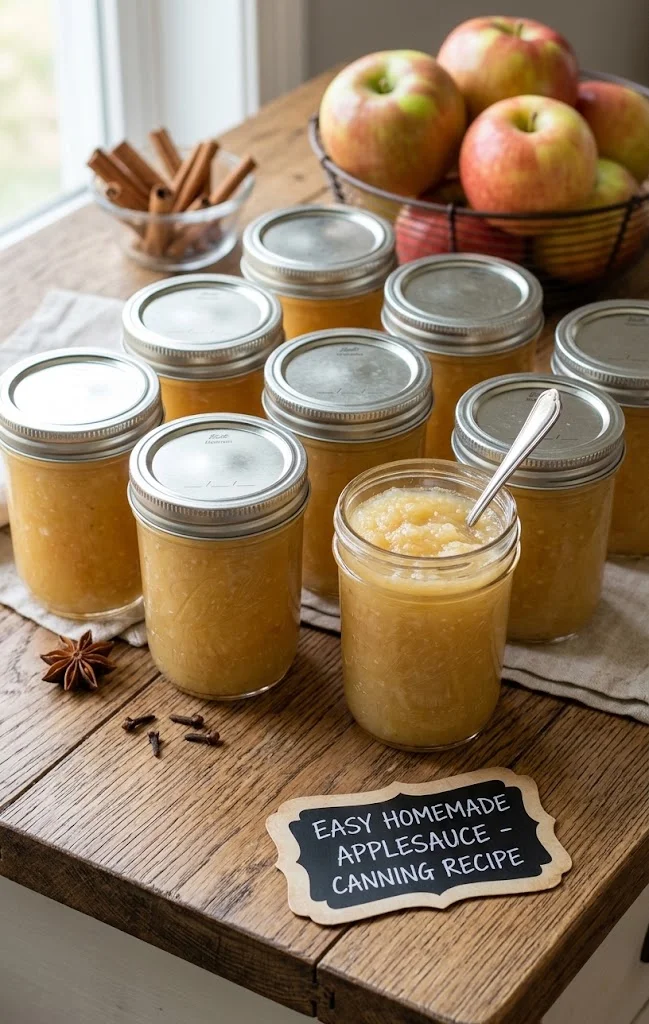
Easy Homemade Applesauce Recipe for Canning – Simple, Sweet & Homemade
Description: This Easy Homemade Applesauce Recipe for Canning transforms fresh apples into a delicious, naturally sweet sauce that you can preserve and enjoy throughout the year. Made with simple ingredients and customizable flavors, this homemade applesauce is perfect for breakfast, baking, snacks, and thoughtful homemade gifts.
Introduction
There is something special about making homemade applesauce from fresh apples. The kitchen fills with a warm, fruity aroma, and ordinary apples slowly transform into a soft, flavorful sauce with a beautiful golden color. Unlike many store-bought varieties, homemade applesauce allows you to control the sweetness, texture, and ingredients.
This Easy Homemade Applesauce Recipe for Canning is a wonderful choice for beginners who want to preserve seasonal apples. You can make it smooth and creamy or leave it slightly chunky for a more traditional homemade texture. A little lemon juice adds brightness, while optional cinnamon creates a comforting flavor that is especially enjoyable during autumn and winter.
The recipe uses basic kitchen equipment and affordable ingredients. Once prepared, the applesauce can be served with breakfast, spooned over yogurt, added to baked goods, or enjoyed as a simple snack.
Most importantly, safe canning practices help you store your homemade applesauce for future meals. Follow a tested canning process, adjust processing times for your altitude, and use suitable jars and lids to help ensure a safe, properly sealed product.
Recipe Overview
- Preparation Time: 30 minutes
- Cooking Time: 30 minutes
- Canning Processing Time: 15 minutes for pint jars at altitudes up to 1,000 feet, following the tested procedure
- Total Time: Approximately 75–90 minutes, plus cooling time
- Yield: Approximately 6 pint jars, depending on the apples and final consistency
- Course: Snack, Side Dish
- Cuisine: Homemade
- Category: Canning, Preserves, Fruit Recipes
- Difficulty: Easy
Ingredients
The following ingredients make a batch of homemade applesauce. For safe canning, use an established, tested applesauce recipe and follow its specified ingredient preparation and processing instructions.
- 6 pounds fresh apples
- 1 cup water, or the amount specified in your tested recipe
- 2 tablespoons bottled lemon juice, if specified by your tested recipe
- ¼–½ cup granulated sugar, optional for flavor
- 1 teaspoon ground cinnamon, optional if permitted by your tested recipe
- ¼ teaspoon salt, optional for flavor
Important canning note: Do not assume that adding lemon juice to any applesauce recipe automatically makes it safe for water-bath canning. Use a current, tested canning recipe from a reliable food-preservation authority, including its exact instructions for acidity, ingredients, jar size, headspace, and processing time. Do not substitute honey for sugar without checking the tested recipe.
Best Apples for Homemade Applesauce
The type of apples you choose has a significant effect on the flavor and texture of your finished sauce.
Sweet Apples
Gala, Fuji, Honeycrisp, and Golden Delicious are popular choices for naturally sweet applesauce. These varieties can help reduce the need for additional sweetener.
Tart Apples
Granny Smith and Braeburn add a tangy flavor that balances sweeter varieties. McIntosh apples soften quickly during cooking, making them useful when you prefer a softer sauce.
Best Combination
For a balanced flavor, combine sweet and tart apples. For example, use Golden Delicious with Granny Smith or Gala with Braeburn.
Mixing apple varieties creates a more complex flavor than using only one variety. You can experiment with different combinations when preparing applesauce for immediate eating or freezing.
Equipment You Will Need
Gather your equipment before beginning to make the process easier.
- Large, heavy-bottomed cooking pot
- Vegetable peeler and sharp knife
- Cutting board
- Potato masher, food mill, or immersion blender
- Measuring cups and spoons
- Tested canning recipe
- Appropriate canning jars and new lids
- Water-bath canner with a rack, if the tested recipe calls for water-bath processing
- Jar lifter and canning funnel
- Clean kitchen towels
- Clean, damp cloth for wiping jar rims
Always inspect jars for cracks or chips before using them. Follow the lid manufacturer’s instructions and your tested recipe for jar preparation.
How to Make Easy Homemade Applesauce
Step 1: Wash and Prepare the Apples
Wash the apples thoroughly under running water to remove dirt and debris.
Peel the apples if you prefer a smooth, uniform sauce. Remove the cores and seeds, then cut the apples into roughly one-inch chunks.
If you are working with a large quantity, prepare the apples in batches to prevent unnecessary browning. Keep the cut pieces clean and begin cooking promptly.
You can leave the skins on if you plan to use a food mill that removes them effectively, but the finished texture and color may vary. Follow the preparation method in your tested canning recipe.
Step 2: Cook the Apples Until Soft
Place the prepared apple pieces into a large, heavy-bottomed pot. Add the amount of water specified in your recipe.
Heat the apples until the mixture begins to simmer, stirring occasionally to prevent sticking. Reduce the heat, cover the pot, and cook for approximately 20–25 minutes, or until the apples are soft enough to mash.
Cooking time depends on the apple variety, the size of the pieces, and how ripe the fruit is.
If the apples begin sticking to the bottom of the pot, reduce the heat and stir more frequently. Add extra water only as needed for cooking and in accordance with your recipe.
Step 3: Mash or Blend the Apples
Once the apples are tender, remove the pot from the heat.
For chunky applesauce, mash the cooked fruit with a potato masher until it reaches your preferred consistency.
For smooth applesauce, use a food mill or immersion blender according to the appliance instructions. Blend carefully to avoid splashing hot fruit.
If you enjoy a rustic texture, leave a few small pieces of apple in the sauce. For a smoother result, process the mixture until most visible chunks disappear.
Step 4: Adjust the Flavor
Taste the applesauce while it is still intended for immediate consumption, before proceeding with the tested canning method.
If the apples are naturally sweet, you may not need any additional sugar. If you prefer a sweeter flavor, add sugar only in the quantity permitted by your chosen recipe.
Ground cinnamon can provide a warm, comforting aroma, but include it in a canned batch only if the tested recipe allows it. Additional ingredients can change the characteristics of a preserved food, so avoid improvising with a canning formula.
For applesauce that will be refrigerated or frozen rather than canned, you have more flexibility to experiment with cinnamon, vanilla, ginger, or other flavorings.
Step 5: Prepare the Canning Equipment
Before filling the jars, prepare the canner, jars, and lids according to the tested recipe and manufacturer’s instructions.
Inspect the jars for cracks and clean them thoroughly. Keep jars hot when required by the recipe to reduce the risk of breakage when filling them with hot applesauce.
Prepare the canner with the appropriate amount of water and ensure the rack is correctly positioned.
If you are using a recipe that requires a boiling-water canner, do not replace it with an ordinary cooking pot unless that pot can safely accommodate the jars and the required water coverage and boiling conditions.
Step 6: Fill the Jars
Keep the applesauce hot as directed by the tested canning instructions.
Place a canning funnel on the jar and ladle in the sauce, leaving the exact headspace specified by your recipe. Many tested applesauce procedures specify ½ inch of headspace, but follow your chosen authority’s instructions.
Remove trapped air bubbles using an appropriate nonmetallic utensil if directed. Check the headspace again and add more sauce if necessary.
Wipe the rim with a clean cloth, then apply the lid and band according to the manufacturer’s directions. Do not overtighten the band.
Work carefully because both the jars and applesauce will be hot.
Step 7: Process the Jars Safely
Place the filled jars into the prepared canner using a jar lifter. Follow the tested recipe for water level, heating, and processing.
For example, the National Center for Home Food Preservation provides a tested applesauce canning procedure that specifies processing times based on jar size and altitude. Use that procedure or another current, reliable tested recipe rather than relying on a generic timing estimate.
Processing time must be adjusted for altitude. The time also depends on the specific recipe, jar size, and canning method.
Do not start the processing timer until the canner has reached the required full boil, as directed by the tested procedure. Maintain the required conditions throughout processing.
If the boil stops or the process is interrupted, follow the tested instructions for restarting the processing time.
Step 8: Cool the Jars and Check the Seals
When the processing time is complete, follow the tested recipe’s instructions for removing the lid and allowing the jars to rest before lifting them out.
Use a jar lifter to place the jars upright on a towel, leaving space between them. Keep them away from cold drafts and do not tighten the bands or press the lids while the jars cool.
Allow the jars to cool undisturbed for 12–24 hours, or for the duration specified by the tested instructions.
After cooling, check each seal according to the lid manufacturer’s guidance. If a jar has not sealed, refrigerate it promptly and use it within the recommended refrigerated storage period, or reprocess it within the time permitted by the tested procedure using a new lid.
Label sealed jars with the product name and date before storing.
Tips for the Best Homemade Applesauce
- Mix apple varieties: Combining sweet and tart apples creates a balanced flavor.
- Choose ripe fruit: Firm, ripe apples with no signs of spoilage are best.
- Cook gently: Moderate heat and frequent stirring help prevent scorching.
- Control the texture: Use a potato masher for chunky sauce or a food mill for a smoother finish.
- Taste before sweetening: Many apples are naturally sweet enough without additional sugar.
- Keep equipment clean: Clean preparation helps maintain food quality.
- Follow tested canning directions: Do not shorten processing times or change the prescribed method.
- Label every jar: Include the date and recipe name so you can rotate your stored food.
- Use sound jars and new lids: Damaged jars or improperly fitted lids can interfere with safe preservation.
Delicious Applesauce Variations
1. Cinnamon Applesauce
For applesauce intended for immediate consumption, refrigeration, or freezing, stir in ground cinnamon to taste. Cinnamon adds a warm flavor that pairs beautifully with sweet apples.
For canned applesauce, use cinnamon only when permitted by the tested recipe.
2. Vanilla Applesauce
Add a small amount of vanilla extract to freshly prepared applesauce intended for immediate eating or freezing. Vanilla complements the natural fruit flavor and gives the sauce a dessert-like aroma.
3. Spiced Applesauce
Nutmeg, ginger, and allspice can add warmth to a refrigerated or frozen batch. Start with small amounts so the spices do not overpower the apples.
Do not add unapproved flavorings to a canned batch.
4. Strawberry Applesauce
For a fresh or frozen variation, cook chopped strawberries with the apples and adjust the texture as needed. This creates a fruitier sauce with a different color and flavor.
Do not use this substitution for shelf-stable canning unless you follow a tested recipe specifically designed for the combination.
5. Pear Applesauce
Ripe pears can be delicious when combined with apples in a fresh or frozen fruit sauce. They contribute a soft texture and gentle sweetness.
For canning, use an established tested recipe for the particular fruit combination rather than substituting pears into a tested applesauce formula.
Ways to Enjoy Homemade Applesauce
Homemade applesauce is versatile and works well in both sweet and savory dishes.
- Serve it over oatmeal or warm breakfast cereal.
- Spoon it over plain yogurt.
- Enjoy it alongside pancakes or waffles.
- Add it to smoothies for fruity flavor.
- Use it as an ingredient in muffins and cakes.
- Serve it as a side dish with roasted chicken or pork.
- Stir it into overnight oats.
- Pack refrigerated portions into lunchboxes with an ice pack when needed.
- Warm it with cinnamon for a simple dessert.
Applesauce can also replace some of the oil in certain baking recipes, although the result may be softer or less rich. Start with a recipe that specifically supports applesauce as a substitute.
Storage Instructions
Properly Canned Applesauce
Store successfully sealed jars in a cool, dry, dark place. For best quality, use home-canned foods within about 12 months, following reputable food-preservation guidance.
Check jars before opening. Discard any jar with a broken seal, leakage, bulging lid, spurting liquid, or other suspicious signs. Never taste food to determine whether it is safe.
After Opening
Refrigerate opened applesauce promptly in a clean, covered container. Use it within approximately 7–10 days if it has been handled properly, or follow the shorter storage period recommended by your food-safety authority.
Discard it if it develops an unusual smell, visible mold, or other signs of spoilage.
Freezing Applesauce
Freezing is a convenient alternative if you do not want to can the sauce.
Allow the applesauce to cool safely, then transfer it to freezer-safe containers. Leave sufficient space at the top for expansion and seal the containers properly.
For best quality, use frozen applesauce within approximately 8 months. Thaw it in the refrigerator and stir before serving.
Important: Refrigeration and freezing are different from shelf-stable canning. Applesauce that has not been processed using a tested canning method should not be stored at room temperature.
Frequently Asked Questions
1. Do I need to add sugar to homemade applesauce?
No. Many apple varieties produce naturally sweet applesauce without added sugar. Sugar is generally used for flavor rather than as a substitute for a safe canning process.
2. Why did my applesauce turn brown?
Apples naturally darken when exposed to air because of oxidation. Working promptly with freshly cut fruit can help minimize discoloration. Slight darkening does not necessarily indicate spoilage, but canned food with other warning signs should be discarded.
3. Can I make applesauce without peeling the apples?
Yes, depending on your preferred texture and preparation method. A food mill can separate much of the skin from the cooked fruit. Follow the preparation instructions in your chosen tested canning recipe.
4. Can I make applesauce in a slow cooker?
Yes, for fresh, refrigerated, or frozen applesauce. Cook the apples with the appropriate amount of liquid until soft, then mash or blend them.
If you intend to can the sauce, transfer it to the preparation method specified by a tested canning recipe and follow its exact instructions.
5. Why did my canning jar fail to seal?
Possible causes include a damaged jar rim, residue on the rim, an improperly applied lid, or a problem during cooling. Follow the lid manufacturer’s instructions and the tested recipe’s guidance for handling unsealed jars.
Refrigerate an unsealed jar promptly, or reprocess it within the permitted period using the prescribed procedure and a new lid.
6. How long does homemade canned applesauce last?
For best quality, properly processed and sealed jars should generally be used within about 12 months when stored in a cool, dry, dark place. Always inspect the jar and seal before use.
7. Can I use honey instead of sugar?
Honey can sweeten applesauce intended for immediate eating, refrigeration, or freezing. For canned applesauce, follow the tested recipe rather than making unverified substitutions.
8. Is a water-bath canner necessary?
Use the canning method specified by a current, tested applesauce recipe. A boiling-water canner is commonly used for applesauce when prepared and processed according to an approved procedure. Do not improvise a canning method or processing time.
Nutrition Information
The following values are approximate estimates for a ½-cup serving of unsweetened applesauce prepared from fresh apples. Actual nutrition varies with apple variety, cooking method, and the amount of added sugar.
| Nutrient | Approximate Amount |
|---|---|
| Calories | 50–70 kcal |
| Carbohydrates | 13–18 g |
| Total Sugars | 10–14 g |
| Dietary Fiber | 1–2 g |
| Protein | 0–1 g |
| Total Fat | 0–0.2 g |
| Vitamin C | Variable |
| Sodium | 0–60 mg |
| Added Sugar | 0 g if unsweetened |
Nutrition values are estimates, not laboratory measurements. Added sugar will increase the carbohydrate and calorie content.
Final Thoughts
Easy Homemade Applesauce is a simple and rewarding way to turn fresh apples into a versatile kitchen staple. With a handful of ingredients and a little preparation, you can create a sauce that is sweet, flavorful, and customized to your preferred texture.
Enjoy it with breakfast, use it in baking, serve it as a side dish, or freeze portions for later. If you want to preserve jars for your pantry, use a reliable, tested canning recipe and follow every safety instruction carefully.
Once you discover how easy it is to make applesauce at home, you may find yourself preparing a batch whenever fresh apples are in season. Try a combination of sweet and tart apples, experiment with flavors for refrigerated or frozen batches, and enjoy the simple taste of homemade goodness.
