
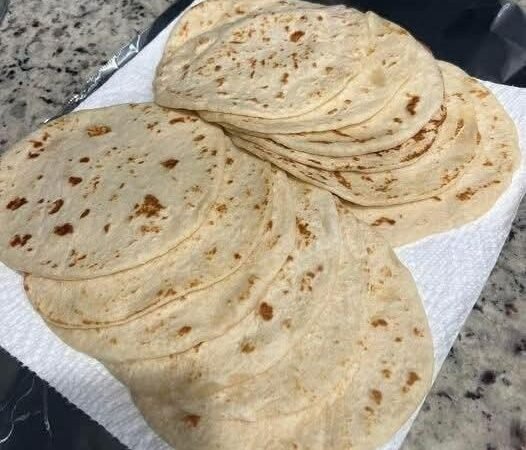
These soft homemade flour tortillas are easy to make with simple pantry ingredients. They turn out warm, flexible, and tender, making them great for tacos, burritos, quesadillas, wraps, and breakfast rolls.
The key to soft tortillas is simple: use warm water, add enough fat, knead the dough until smooth, and give it time to rest. The short rest lets the dough relax, so it rolls out without fighting back.
This recipe makes about 10–12 medium tortillas.
Ingredients
- 2 cups all-purpose flour
- ½ teaspoon salt
- ¾ teaspoon baking powder
- 3 tablespoons vegetable oil or melted butter
- ¾ cup warm water, added as needed
How to Make Soft Flour Tortillas
1. Mix the Dry Ingredients
Add the flour, salt, and baking powder to a large bowl.
Whisk or stir well so the salt and baking powder are spread evenly through the flour.
This simple step helps give the tortillas a light and even texture.
2. Add the Oil or Butter
Pour the vegetable oil into the flour mixture.
If you prefer a richer flavor, use melted butter instead.
Use your fingers to rub the fat into the flour until the mixture looks slightly crumbly and feels soft.
Coating the flour with fat helps keep the finished tortillas tender.
3. Add the Warm Water
Slowly pour in the warm water while mixing.
Do not add all of the water at once. Depending on your flour, you may need a little less or slightly more.
Mix until a soft dough forms.
If the dough feels dry or has trouble coming together, add water 1 tablespoon at a time.
If it feels very sticky, sprinkle in a little extra flour.
The finished dough should be soft and smooth but not wet.
4. Knead the Dough
Transfer the dough to a clean counter.
Knead it gently for about 2–3 minutes.
You do not need to knead it for a long time. Just work the dough until it becomes smooth and elastic.
If the dough feels stiff, cover it and let it sit for a few minutes before kneading again.
5. Rest the Dough
Shape the dough into a ball and place it back in the bowl.
Cover it with a clean kitchen towel.
Let it rest for 15–20 minutes.
Do not skip this step. Resting gives the gluten time to relax, which makes the dough much easier to roll into thin circles.
For even softer tortillas, you can let the dough rest for up to 30 minutes.
6. Divide Into Portions
After resting, divide the dough into 10–12 equal pieces.
Roll each piece between your hands to form a smooth ball.
Try to keep the portions close in size so all of the tortillas cook at the same rate.
Cover the dough balls with a towel while you work. This keeps them from drying out.
7. Roll the Tortillas
Lightly flour your work surface.
Take one dough ball and flatten it gently with your fingers.
Use a rolling pin to roll it into a thin circle about 6–7 inches wide.
Turn the dough as you roll so it keeps a round shape.
Try not to use too much flour. Excess flour can make the tortillas dry and may cause extra flour to burn in the pan.
If the dough keeps shrinking back, let it rest for another 5–10 minutes before rolling.
The thinner you roll the dough, the softer and more flexible the cooked tortilla will be.
8. Cook the Tortillas
Heat a dry skillet, cast-iron pan, or tawa over medium-high heat.
The pan should be hot before you add the first tortilla.
Place one rolled tortilla onto the hot pan.
Cook for about 30–40 seconds, or until small bubbles begin to form and the bottom develops a few light golden spots.
Flip the tortilla.
Cook the second side for another 20–30 seconds.
You may see the tortilla puff up slightly. That is a good sign.
Do not leave the tortilla on the pan too long. Overcooking removes moisture and can make it tough.
Continue cooking the remaining tortillas one at a time.
9. Keep the Tortillas Soft
As each tortilla comes off the pan, place it inside a clean kitchen towel.
Stack the tortillas on top of each other and keep them covered.
The trapped warmth and steam help keep them soft and flexible.
If you are making a large batch, you can also place the cooked tortillas in a tortilla warmer or covered container.
Tips for Soft, Flexible Tortillas
Use Warm Water
Warm water helps bring the dough together and gives you a softer texture. The water should be warm, not boiling hot.
Let the Dough Rest
A short rest makes a big difference. Dough that has not rested can spring back when rolled, making it hard to get thin tortillas.
Don’t Add Too Much Flour
Use only a light dusting of flour when rolling. Too much flour can make the tortillas dry.
Don’t Overcook
This is one of the most important tips.
Flour tortillas cook very quickly. Once you see bubbles and golden spots, flip them. A few extra minutes on the pan can turn soft tortillas into dry ones.
Keep Them Covered
Always cover cooked tortillas with a clean towel or place them in a covered container. This keeps the moisture inside.
Use Butter for More Flavor
Vegetable oil makes soft tortillas with a neutral taste. Melted butter gives them a richer, slightly buttery flavor.
Optional Variations
Whole Wheat Tortillas
For a more hearty tortilla, replace half of the all-purpose flour with whole wheat flour.
You may need to add 1–2 tablespoons of extra water because whole wheat flour absorbs more liquid.
Roll and cook the tortillas the same way.
Garlic Herb Tortillas
Add these ingredients to the dry mixture:
- ½ teaspoon garlic powder
- 1 teaspoon dried oregano
- 1 teaspoon dried cilantro or parsley
Mix well before adding the oil and water.
These tortillas are great with chicken, grilled vegetables, or savory wraps.
Butter Tortillas
Replace the vegetable oil with melted unsalted butter.
Let the butter cool slightly before adding it to the flour.
The result will have a rich flavor and soft texture.
Yogurt Tortillas
For an extra tender tortilla, replace part of the warm water with plain Greek yogurt.
Start by replacing about ¼ cup of the water with Greek yogurt. Add the remaining water slowly until a soft dough forms.
Because yogurt changes the texture of the dough, you may need a little extra flour or water while mixing.
How to Serve Homemade Tortillas
These tortillas can be used in many ways.
Tacos
Fill them with seasoned beef, chicken, fish, beans, lettuce, tomato, cheese, and your favorite taco toppings.
Quesadillas
Add shredded cheese and cooked chicken or vegetables. Fold the tortilla and cook until the cheese melts.
Burritos
Fill with rice, beans, meat, cheese, salsa, and vegetables, then roll tightly.
Breakfast Wraps
Use scrambled eggs, cheese, potatoes, sausage, or vegetables for an easy breakfast wrap.
Shawarma-Style Wraps
Fill with seasoned chicken, lettuce, cucumber, tomato, onions, and garlic sauce.
Simple Butter Wraps
Warm a tortilla and spread it with butter. You can also add a little honey for a quick snack.
How to Store Homemade Tortillas
Let the tortillas cool completely before storing them.
Place them in an airtight container or zip-top bag.
They can be kept at room temperature for about 2–3 days.
For longer storage, refrigerate them for up to about a week.
You can also freeze the tortillas. Place a small piece of parchment between each tortilla so they do not stick together.
Store them in a freezer-safe bag for up to 2–3 months.
To reheat, place one tortilla in a warm skillet for a few seconds on each side. You can also microwave a small stack under a slightly damp paper towel.
Common Problems and Easy Fixes
Tortillas are tough: They were likely overcooked or the dough was too dry. Add enough water to make a soft dough and cook them quickly.
Dough keeps shrinking: Let the dough balls rest longer before rolling.
Tortillas are cracking: The dough may be too dry, or the tortillas may have been cooked too long.
Tortillas are not soft: Keep them covered as soon as they come off the pan. Also avoid overcooking.
Tortillas won’t puff: Make sure the skillet is hot enough and roll the dough evenly.
Final Thoughts
Making flour tortillas at home is much easier than it may seem. With just flour, salt, baking powder, oil or butter, and warm water, you can make a fresh batch that is soft, warm, and ready for almost any meal.
The most important steps are to keep the dough soft, let it rest, roll the tortillas thin, and cook them quickly on a hot pan.
Once you have the basic recipe down, try whole wheat, garlic herb, butter, or yogurt versions to create your own favorite homemade tortilla.
