
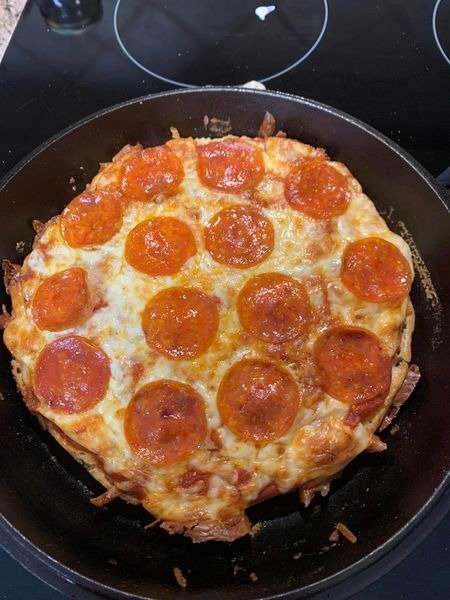
This Sourdough Discard Pizza Crust is an easy way to turn leftover starter into a crispy, chewy homemade pizza. The crust has a light tang, golden edges, and a soft center that works well with almost any topping.
You do not need special baking skills to make it. The dough is simple to mix, easy to shape, and can be baked the same day or left in the fridge overnight for more flavor.
Ingredients
For the Pizza Dough
- 1 cup (240g) sourdough discard
- 1½ cups (190g) all-purpose flour
- ¾ cup warm water
- 1 tablespoon olive oil
- 1 teaspoon salt
- 1 teaspoon sugar
- 1 teaspoon instant yeast, optional
- Extra flour or cornmeal for shaping
For Topping
Use any pizza toppings you like:
- Pizza sauce
- Mozzarella cheese
- Cheddar cheese
- Pepperoni
- Cooked chicken
- Mushrooms
- Bell peppers
- Red onion
- Olives
- Fresh basil
- Oregano
- Red pepper flakes
How to Make Sourdough Discard Pizza Crust
1. Mix the Dough
Add the sourdough discard, warm water, and olive oil to a large mixing bowl. Stir until combined.
Add the sugar and salt. If you are using instant yeast, add it as well.
Slowly add the flour while mixing. Keep stirring until a rough dough forms.
The dough should feel soft and slightly sticky. If it feels very wet, add a little more flour. If it feels too dry, add a small splash of water.
2. Knead the Dough
Transfer the dough to a lightly floured surface.
Knead it for about 8–10 minutes. Work the dough until it becomes smoother and more elastic.
You can also use a stand mixer with a dough hook if you prefer. Mix until the dough pulls together and feels soft.
Do not add too much flour while kneading. A slightly soft dough will give you a lighter pizza crust.
3. Let the Dough Rise
Lightly oil a clean bowl and place the dough inside. Cover the bowl with plastic wrap, a lid, or a clean kitchen towel.
Let the dough rest in a warm spot for about 1–2 hours, or until it looks puffy and has increased in size.
For a stronger sourdough flavor, place the covered dough in the refrigerator overnight. Let it sit at room temperature for about 30–60 minutes before shaping.
If you skip the yeast, the dough may need more time to rise because the discard alone may not provide enough lifting power.
4. Preheat the Oven
Place a pizza stone or baking steel in the oven if you have one.
Preheat the oven to 475°F (245°C). Let the stone or steel heat for at least 30 minutes.
If you do not have a pizza stone, use a heavy baking sheet. Place it in the oven while it preheats so the surface gets hot.
A hot baking surface helps the bottom of the pizza turn crisp and golden.
5. Shape the Dough
Turn the dough onto a lightly floured surface.
Gently press it down and shape it into a ball. Let it rest for about 5–10 minutes if it keeps shrinking while you stretch it.
Use your hands to gently stretch the dough into a round or oval shape.
Keep the center fairly thin and leave a slightly thicker edge around the outside.
For a thin and crispy pizza, stretch the dough more. For a soft and chewy crust, leave it a little thicker.
Transfer the shaped dough to a piece of parchment paper or a lightly floured pizza peel.
6. Add the Toppings
Brush the surface lightly with olive oil.
Spread a thin layer of pizza sauce over the dough. Leave a small border around the edges.
Add mozzarella cheese and your favorite toppings.
Try not to overload the pizza. Too much sauce, cheese, or meat can make the center heavy and prevent the crust from becoming crisp.
For a simple pizza, use tomato sauce, mozzarella, oregano, and fresh basil.
7. Bake the Pizza
Carefully transfer the pizza to the hot pizza stone, steel, or baking sheet.
Bake for about 12–15 minutes, depending on the thickness of the crust and your oven.
The pizza is ready when the cheese is melted and bubbling and the crust is golden brown around the edges.
For extra browning, you can place the pizza under the broiler for the last 1–2 minutes. Watch it closely so it does not burn.
8. Cool and Slice
Remove the pizza from the oven and let it rest for about 2–3 minutes.
Add fresh basil, oregano, chili flakes, or a small drizzle of olive oil if desired.
Slice and serve while warm.
Tips for the Best Pizza Crust
Use Active-Looking Discard
Older discard can still work, but fresh discard usually gives the dough a better smell and flavor.
Do Not Add Too Much Flour
The dough should be soft. Adding too much flour can make the crust dense and tough.
Give the Dough Enough Time
If you have extra time, an overnight rest in the refrigerator can add more sourdough flavor and improve the texture.
Preheat the Baking Surface
A very hot pizza stone or baking steel helps the bottom cook fast. This gives you a crisp crust while keeping the inside soft.
Keep Toppings Light
A thin layer of sauce and a moderate amount of cheese usually gives the best result.
Use Olive Oil on the Edges
A light brush of olive oil around the crust helps it turn golden and adds a nice flavor.
Easy Topping Ideas
Classic Cheese Pizza
Use pizza sauce, mozzarella, oregano, and fresh basil.
Chicken Pizza
Add cooked chicken, mozzarella, red onion, and bell peppers.
Veggie Pizza
Top with mushrooms, bell peppers, onions, olives, spinach, and mozzarella.
Spicy Pizza
Use pepperoni, mozzarella, jalapeños, red pepper flakes, and a little oregano.
Garlic Herb Pizza
Brush the crust with olive oil mixed with garlic powder and Italian herbs before baking.
Can You Make the Dough Ahead?
Yes. This dough is great for making ahead.
After kneading, place the dough in a lightly oiled container and cover it well. Keep it in the refrigerator for up to 2 days.
When ready to make pizza, let the dough sit at room temperature for about 30–60 minutes. Then shape, top, and bake as usual.
You can also freeze the dough. Wrap it tightly and freeze it for up to about 2 months. Thaw it in the refrigerator overnight before using.
How to Store Leftover Pizza
Let leftover pizza cool completely before storing it.
Place the slices in an airtight container and refrigerate for up to 3 days.
To reheat, use a skillet, oven, or air fryer. The oven or air fryer will help bring back some of the crisp texture.
Avoid microwaving for too long because the crust can become soft and chewy.
Why You’ll Love This Recipe
This pizza crust is a great way to use sourdough discard instead of throwing it away. The dough is easy to work with and can be made with or without instant yeast.
The finished crust has crisp edges, a soft center, and a mild sourdough taste. It also gives you plenty of room to change the toppings based on what you already have in the kitchen.
Whether you are making a quick weeknight dinner or planning a weekend pizza night, this homemade sourdough discard crust is a simple choice that can be used again and again.
Recipe Notes
Prep Time: 15 minutes
Rise Time: 1–2 hours
Bake Time: 12–15 minutes
Total Time: About 2½ hours
Yield: 1 large pizza or 2 smaller pizzas
Oven Temperature: 475°F (245°C)
Nutrition Per Serving
Nutrition will vary based on the toppings used. For the crust alone, calories, carbohydrates, protein, fat, and sodium will depend on the exact flour, discard, oil, and portion size.
