
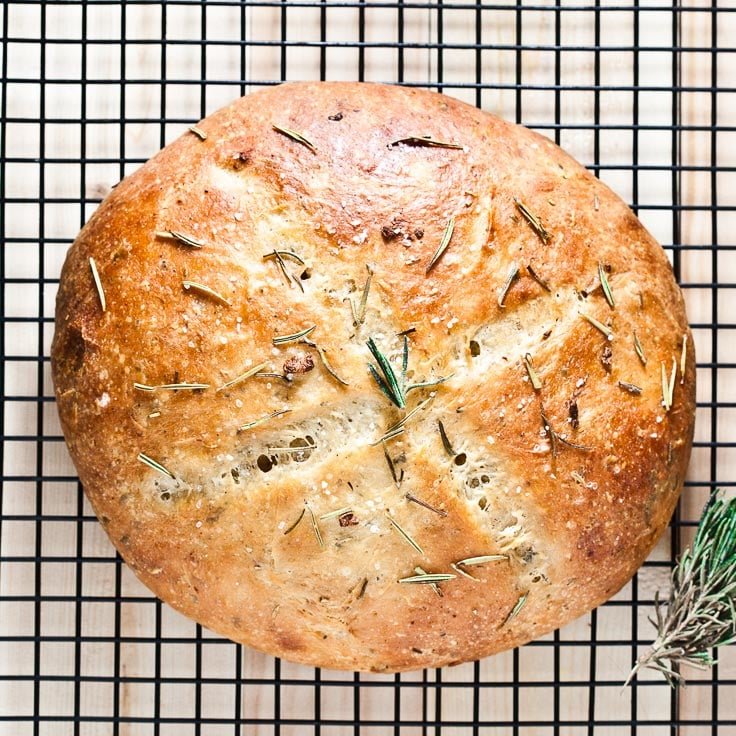
This Rustic No-Knead Rosemary Garlic Bread is packed with the warm flavor of roasted garlic and fresh rosemary. The outside turns golden and crisp, while the inside stays soft, chewy, and full of flavor. The best part is that there is no kneading required.
The dough is mixed in just a few minutes and left to rise overnight. When you are ready to bake, simply shape it, place it in a hot Dutch oven, and let the oven do the work. Serve it with soup, pasta, roasted meats, or a little olive oil for dipping.
Ingredients
- 3 cups all-purpose flour or bread flour
- 2 teaspoons salt
- ½ teaspoon instant yeast
- 1½ cups warm water
- 2 tablespoons fresh rosemary, finely chopped
- 4 cloves roasted garlic, mashed
- 1 tablespoon olive oil, optional
- A little extra flour for shaping
How to Make Rosemary Garlic Bread
1. Mix the Dough
Add the flour, salt, and instant yeast to a large mixing bowl. Whisk them together until evenly combined.
Pour in the warm water. Add the chopped rosemary, mashed roasted garlic, and olive oil if using.
Stir everything together with a wooden spoon or spatula. Keep mixing until all the flour is absorbed and a sticky, rough dough forms.
There is no need to knead the dough. The long resting time will help develop the texture and flavor.
2. Let the Dough Rise
Cover the bowl tightly with plastic wrap or a clean kitchen towel.
Leave the dough at room temperature for 12 to 18 hours. Overnight is ideal.
As it rests, the yeast will slowly work through the dough. By morning, the dough should look bubbly, puffy, and nearly doubled in size.
For the best flavor, give the dough the full overnight rise whenever possible.
3. Shape the Loaf
Lightly flour your work surface and carefully turn the dough onto it.
The dough will be soft and sticky, so use a little flour on your hands if needed. Gently fold the edges toward the center and shape the dough into a round loaf.
Do not knead it. Handle it gently so you do not remove too much of the air that formed during the rise.
Place the shaped dough on a piece of parchment paper. Cover it loosely and let it rest for another 30 to 40 minutes.
4. Preheat the Dutch Oven
Place a Dutch oven with its lid inside the oven.
Preheat the oven to 450°F (230°C) and let the Dutch oven heat for at least 30 minutes.
A very hot Dutch oven helps create the crisp crust that makes no-knead bread so good.
5. Bake the Bread
Carefully remove the hot Dutch oven from the oven.
Using the parchment paper, lower the dough into the Dutch oven.
Cover it with the lid and place it back in the oven.
Bake for 30 minutes with the lid on.
Then carefully remove the lid and continue baking for another 10 to 15 minutes. The bread should be deep golden brown and the crust should feel firm and crisp.
If you prefer a darker crust, you can let it bake for a few extra minutes, but keep an eye on it so it does not burn.
6. Cool Before Slicing
Remove the finished loaf from the Dutch oven and transfer it to a wire rack.
Let it cool for at least 30 to 60 minutes before slicing.
It may be tempting to cut into it right away, but allowing the bread to cool helps the inside finish setting. This gives you a better crumb and cleaner slices.
How to Roast Garlic
Roasted garlic gives this bread a sweet, mild garlic flavor instead of the sharp taste of raw garlic.
To roast garlic, place whole garlic cloves or a small garlic bulb on foil. Drizzle with a little olive oil and wrap loosely.
Bake at 375°F (190°C) for about 30 to 40 minutes, or until the garlic is very soft and lightly golden.
Let it cool, then mash the cloves with a fork before adding them to the dough.
Tips for the Best No-Knead Bread
- Use warm water: The water should feel warm, not hot. Very hot water can affect the yeast.
- Do not add too much flour: The dough should be sticky. Adding too much flour can make the bread heavy.
- Let it rise long enough: The 12–18 hour rise gives this bread its flavor and airy texture.
- Use fresh rosemary: Fresh rosemary gives the loaf a much stronger and fresher flavor.
- Roast the garlic: Roasted garlic adds a smooth, slightly sweet taste.
- Preheat the Dutch oven: A hot pot is important for getting a crisp crust.
- Do not skip the cooling time: The bread needs time to finish cooking inside after it comes out of the oven.
Serving Ideas
This rosemary garlic bread is great on its own, but there are many ways to serve it.
Slice it and serve with warm soup or stew. It also pairs well with pasta dishes, especially creamy pasta and tomato-based sauces.
For a simple snack, toast a slice and drizzle it with extra virgin olive oil. You can also spread it with butter while it is still slightly warm.
The bread also works well beside roasted chicken, grilled vegetables, salads, or a cheese board.
How to Store It
Keep the cooled bread in a paper bag, bread box, or clean kitchen towel. This helps protect the crust while allowing some air to circulate.
Avoid storing it in a sealed plastic bag at room temperature if you want to keep the crust crisp.
For longer storage, slice the bread and freeze it in an airtight freezer bag. Individual slices can be removed as needed and warmed in a toaster or oven.
Final Thoughts
This Rustic No-Knead Rosemary Garlic Bread is a simple way to make bakery-style bread at home without spending hours kneading dough. The overnight rise builds great flavor, while roasted garlic and fresh rosemary make every slice fragrant and savory.
With a crisp golden crust and soft, chewy center, this homemade loaf is perfect for everyday meals, family dinners, or weekend baking. Once you try this easy method, you may find yourself making a fresh loaf again and again.
